


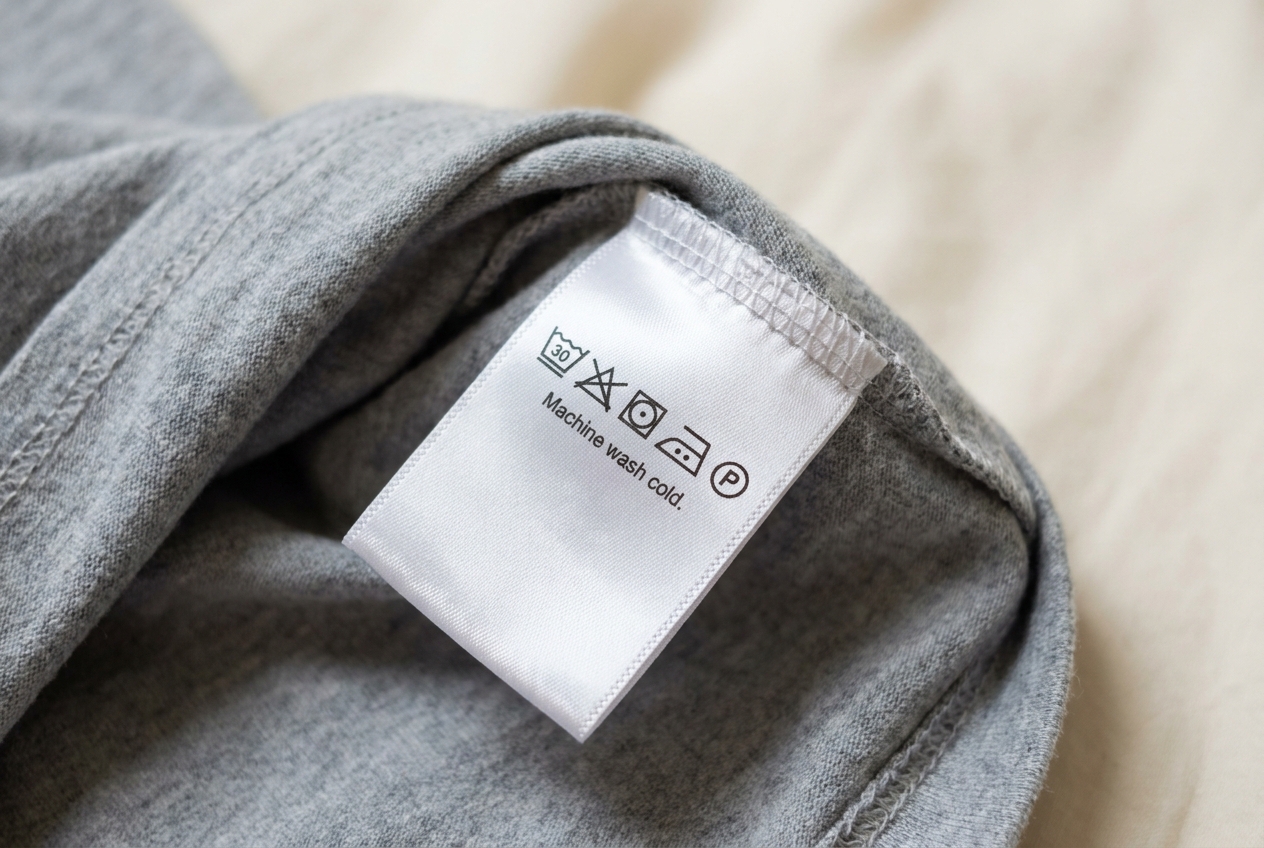
Every garment has two labels: one to tell you how to care of the garment, and one that tells you who made it. Different label types are used for each one and each of specific requirements, placement considerations, and regulatory obligations.
Knowing the difference between care labels and custom branded labels is critical for apparel companies, manufacturers, and businesses entering the clothing market. Compliance is crucial and ignoring the guidelines can be costly. Being smart about your garment labels will avoid these issues and strengthen brand recognition and customer loyalty.
This guide explains both label types, their legal requirements, design considerations, and best practices for implementation across your product lines.
Defining Care Labels and Brand Labels
Care labels provide essential information about garment maintenance, including washing instructions, drying methods, ironing temperatures, and chemical cleaning guidance. These labels serve a practical consumer protection function mandated by federal regulations.
Brand labels identify the manufacturer, designer, or retailer responsible for the garment. These labels serve marketing and legal identification purposes, building brand recognition while meeting mandatory country-of-origin and company identification requirements.
The distinction matters because each label type has different regulatory requirements, placement rules, and design constraints. Combining both functions into a single label is possible but requires careful planning to meet all applicable standards.
Federal Requirements for Care Labels
The Federal Trade Commission's Care Labeling Rule requires permanent care labels on most textile clothing sold in the United States. This regulation protects consumers by ensuring they receive adequate information to maintain their purchases properly.
Care labels must include instructions for at least one safe cleaning method. The instructions must cover the complete care process: washing, drying, ironing, and any special treatments. Warnings about harmful care methods are also required when regular care processes could damage the garment.
The rule specifies that care instructions must be "clear and understandable to consumers." Technical jargon or ambiguous language violates this requirement. Instructions must be specific enough that consumers can follow them successfully.
Permanence requirements ensure care information remains available throughout the garment's useful life. Labels must withstand the care processes they describe without becoming illegible. This typically requires woven or printed labels with colorfast inks and durable attachment methods.
Placement rules require care labels to be easily found and read. For most garments, this means placement at the neckline or side seam where consumers naturally look for label information. The label must remain attached throughout normal use and care and should only be removed if done so by the consumer.
Brand Label Requirements and Standards
Brand labels must include country-of-origin information as required by U.S. Customs regulations. This requirement applies to all imported garments and many domestic products, depending on the supply chain's complexity.
Company identification information helps consumers and regulators trace products back to responsible parties. While specific formats vary, brand labels typically include company names, trademark symbols, and sometimes contact information.
Size identification often appears on brand labels, though this can be accomplished through separate size labels. Size information must be accurate and correspond to industry-standard sizing charts where applicable.
Fiber content disclosure is required for textile products but can appear on either care labels or brand labels. This information must be accurate within specified tolerances and listed in order of predominance by weight.
Registration numbers, lot codes, and other tracking information often appear on brand labels to support quality control and inventory management systems. While not federally required, this information provides valuable business intelligence.

Material and Construction Differences
Care labels prioritize durability and legibility over aesthetic appeal. They must survive repeated exposure to the care processes they describe, which often means choosing materials and construction methods focused on functional performance.
Woven labels excel for care label applications because the weaving process integrates text directly into the fabric structure. Colors and text cannot wash out because they are part of the fabric itself. Woven labels also maintain their shape and attachment integrity through countless wash cycles.
Printed labels offer cost advantages for care label applications, especially when large quantities of identical information are needed. Screen printing and heat transfer printing can produce care labels at very competitive prices for high-volume applications.
Brand labels often prioritize appearance alongside durability. These labels represent your company's image and quality standards, so aesthetic considerations carry more weight in material and construction decisions.
Satin weaves create premium brand and care labels with sophisticated appearance and excellent durability. The smooth surface texture provides ideal printing surfaces for detailed logos while maintaining professional appearance through extended use.
Cotton twill offers traditional appearance for heritage brands and classic fashion lines. The natural fiber content and textured surface create associations with quality craftsmanship and attention to detail.
Design and Information Hierarchy
Care label design focuses on information clarity and accessibility. Typography choices, symbol usage, and layout decisions all serve the primary goal of communicating care instructions effectively.
Font selection for care labels should prioritize readability over style. Sans-serif fonts typically perform better at small sizes, while adequate character spacing prevents confusion between similar letters or numbers.
International care symbols provide universal communication across all languages. These standardized symbols communicate washing, drying, ironing, and cleaning instructions without requiring text translation.
Information sequencing should follow logical care processes: sorting, pre-treatment, washing, drying, ironing, and special instructions. This sequence helps consumers develop proper care routines and reduces the likelihood of mistakes during garment care.
Brand label design balances information requirements with marketing objectives. These labels must convey required information while reinforcing brand identity and quality perception.
Logo placement and sizing affect brand recognition and perceived quality. Oversized logos can appear unprofessional, while undersized logos fail to build brand awareness. The optimal balance depends on garment type, target market, and brand positioning.
Typography hierarchy helps consumers locate essential information quickly. Company names, size information, and country-of-origin data each require different visual prominence levels to support both regulatory compliance and user experience.
Placement Strategies and Best Practices
Label placement affects both compliance and customer experience. Strategic placement decisions can enhance brand visibility while meeting regulatory requirements and avoiding comfort issues.
Care label placement typically follows FTC guidelines for visibility and accessibility. Most garments place care labels at the left side seam or center back neckline where consumers expect to find care information.
Brand label placement offers more flexibility but should consider customer experience and brand visibility objectives. Center back neckline placement maximizes brand exposure, while side seam placement reduces skin contact and comfort issues.
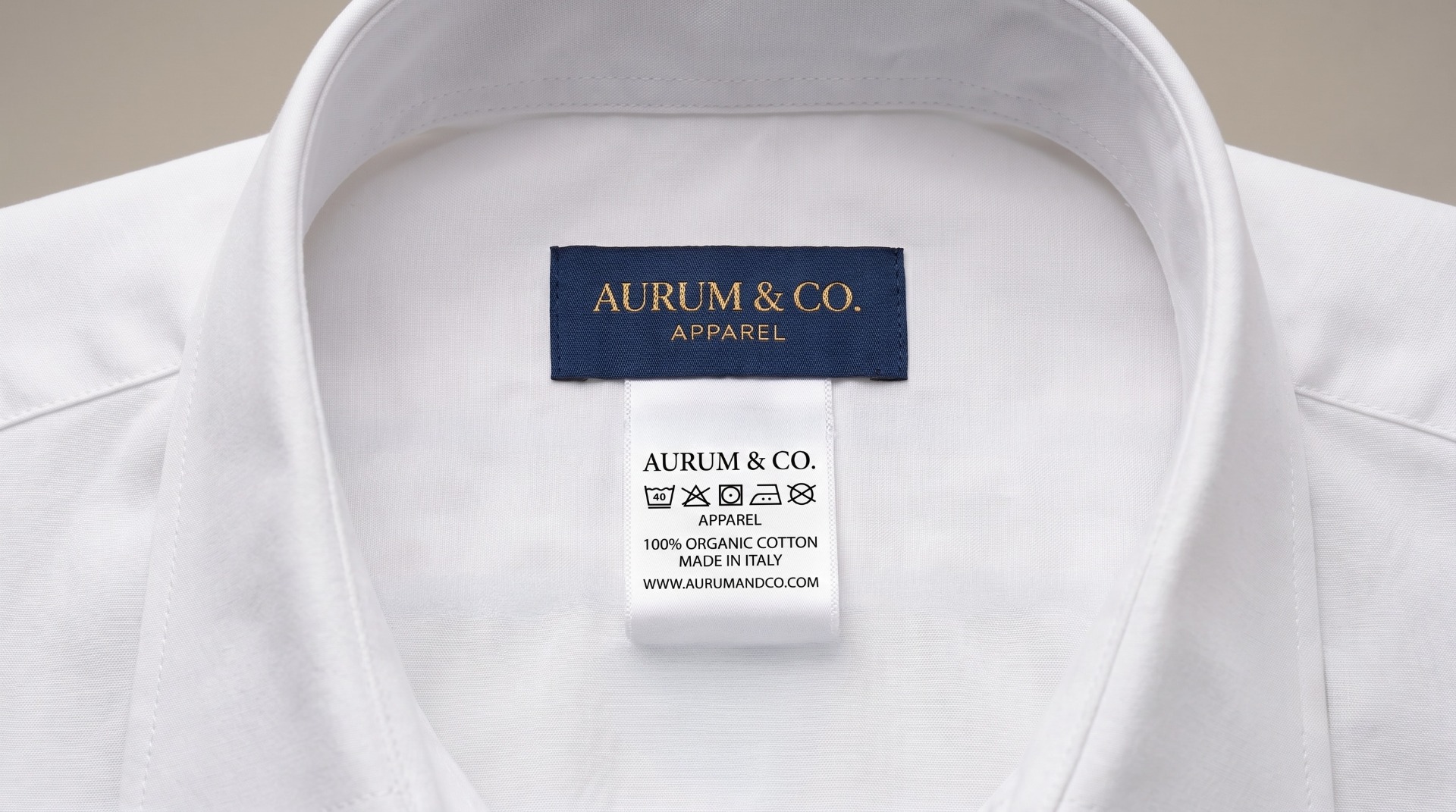
Multiple label strategies separate care and brand information onto different labels. This approach allows optimized design and placement for each label's specific purpose while providing flexibility for product line variations.
Combine labels and integrate care and brand information onto a single label. This approach reduces labor costs and label quantities while requiring careful design to meet both functional and branding objectives.
Hidden placement strategies position labels where they provide required information without affecting garment aesthetics. Pocket interiors, inside seams, and other concealed locations work well for casual and fashion-forward garments.
Cost Considerations and Production Planning
Label costs vary significantly based on material choices, production methods, and quantity requirements. Understanding what drives these costs helps optimize label orders within budget constraints.
Care label costs typically favor standardization and volume production. Using identical care instructions across product lines reduces design costs and maximizes quantity discounts.
Material choices significantly impact production costs. Printed labels generally cost less than woven labels for simple text-based designs, while woven labels offer better durability and quality.
Brand label costs justify higher per-piece expenses because they directly impact brand perception and marketing objectives. Premium materials and construction methods often provide positive return on investment through a better brand image.
Inventory management strategies can optimize label costs through consolidated ordering and standardized specifications. Coordinating label orders across product lines often achieves better pricing and reduces administrative overhead.
Compliance Management and Quality Control
Maintaining compliance requires systematic approaches to label specification, production oversight, and quality verification. Compliance failures can result in costly product recalls and regulatory penalties.
Documentation systems should track label specifications, approved samples, and production records for all products. This documentation supports compliance audits and helps resolve customer inquiries about product care.
Incoming inspection procedures verify label accuracy, durability, and attachment quality before production. These inspections catch problems before they become incorporated into finished products.
End-product testing validates label performance under actual use conditions. Wash testing, wear testing, and durability evaluation ensure labels meet their intended performance standards.
Corrective action procedures address compliance issues quickly and systematically. Having established procedures for label problems reduces response time and minimizes compliance risks.
International Considerations
Global markets require understanding different regulatory requirements for care labels and brand labels. Requirements vary significantly between countries and regions.
European Union regulations differ from U.S. requirements in several important areas. Textile regulation standards, language requirements, and symbol usage all require careful attention for EU market access.
Asian markets often have specific requirements for fiber content disclosure, country-of-origin marking, and care instruction formatting. Understanding these requirements early prevents costly redesign and relabeling efforts.
Language requirements vary by market and can affect label design and production planning. Some markets require multiple languages, while others accept English-only labeling.
Import documentation must align with label information to avoid customs delays and penalties. Consistency between shipping documents, labels, and actual product specifications is essential for smooth international trade.
Technology Integration and Future Trends
Digital technologies are transforming how brands provide care and brand information to customers. QR codes, NFC tags, and smartphone apps offer new ways of finding product information.
Digital care instructions can provide more detailed information than physical labels allow. Video demonstrations, seasonal care variations, and personalized recommendations become possible through digital platforms.
Smart labels with embedded technology can track garment care history, remind customers about care schedules, and provide feedback about care effectiveness. These technologies are moving from experimental to commercial applications.
Sustainability considerations are driving demand for recyclable label materials, reduced packaging, and longer-lasting labels. Brands increasingly consider environmental impact in label specification decisions.
Blockchain and traceability systems may require enhanced label information to support supply chain transparency and authenticity verification. These emerging requirements could significantly impact label design and information requirements.
Strategic Implementation
Building a successful label for your products requires careful planning, clear specifications, and systematic implementation. The investment in a professional custom label pays dividends through improved compliance, enhanced brand image, and operational efficiency.
Start with regulatory requirements as the foundation for all label decisions. Compliance is non-negotiable, so ensure your label meets all applicable requirements before addressing aesthetic and marketing objectives.
Develop standardized specifications that can be applied consistently across product lines. Standardization reduces costs, simplifies inventory management, and ensures consistent brand presentation.
Work with experienced label manufacturers, like Custom Woven Labels, who understand both regulatory requirements and production limitations. Our expertise will help you avoid costly mistakes and ensure specifications can be produced reliably.
Plan for growth and product line expansion when developing label specifications. Flexible systems accommodate new products and markets without requiring complete redesign and retooling.
The distinction between care labels and brand labels reflects their different purposes and requirements. Understanding these differences enables better decisions about materials, design, placement, and production methods. Professional guidance helps navigate regulatory requirements while optimizing cost and brand impact. Ready to develop labeling solutions that support both compliance and brand objectives? Contact us for expert guidance and competitive pricing on all your labeling needs.
The information below is required for social login
Sign In
Create New Account