


At a sample quantity of five or ten pieces, minor inconsistencies are easy to catch and easy to fix. Scale that same order to five hundred units heading to retail, and the margin for error collapses. Production buyers know this. A patch that measures 3.1 inches on one batch and 2.9 inches on the next is not a small variation: it is a quality control failure.
Custom woven patches behave differently from their embroidered counterparts, and understanding those differences before you specify an order is the most reliable way to get consistent results at volume. This guide covers the technical specs that matter most: size, thread count limits, color constraints, backing options, and the pre-production workflow that separates clean runs from costly reruns.
How Woven Patches Are Made
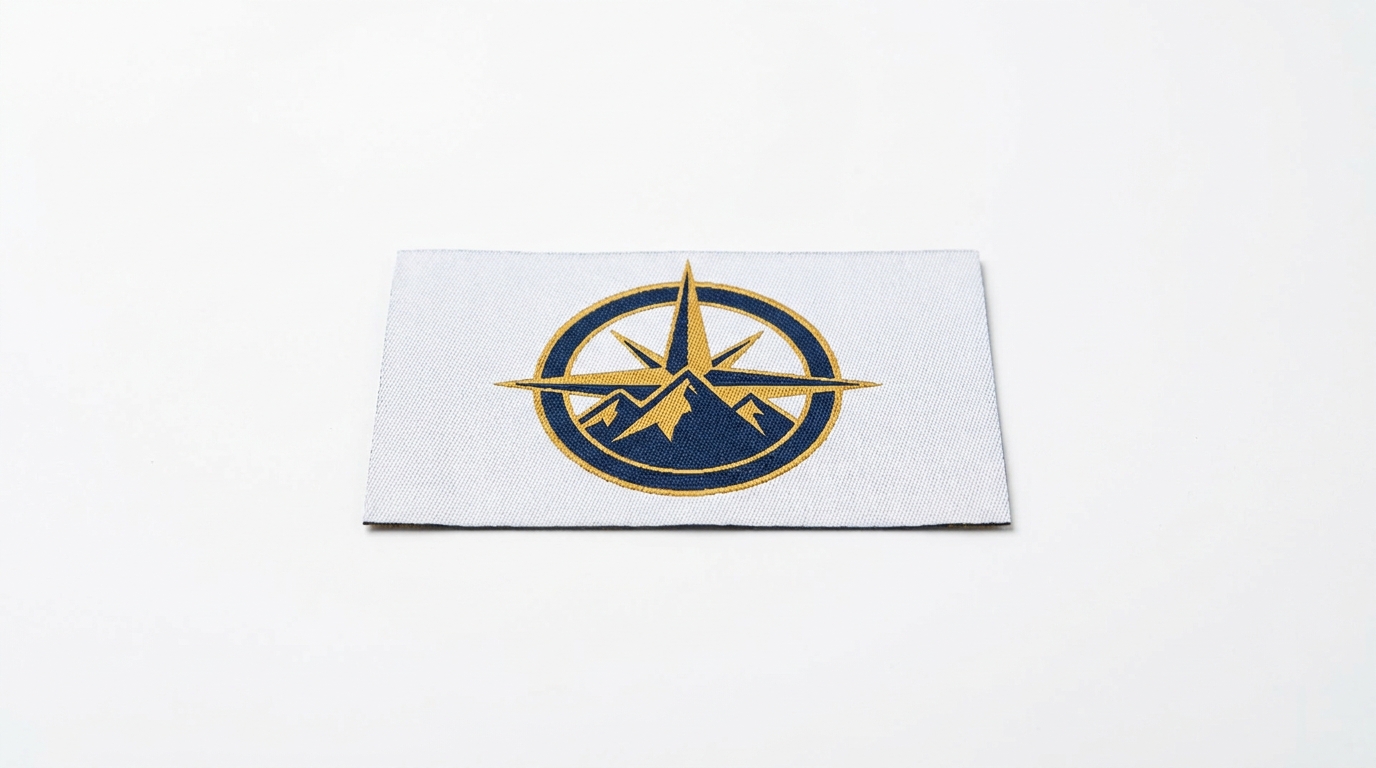
Woven patches are produced on modern digital looms, where the design is built directly into the fabric structure using interlocking warp and weft threads. There is no surface embroidery layer sitting on top of a twill base. The image is the weave itself.
That construction gives woven patches a flat, smooth surface that handles fine detail and small text exceptionally well. It also makes them thinner and lighter than embroidered patches, which matters for uniform applications or garments where a raised feel wouldn’t be desired. The tradeoff is that very large designs or textured effects that benefit from dimensional thread piling are generally better served by embroidery. For clean, detailed logos, product branding, and precision marks, woven is the stronger technical choice.
One more practical note: woven patches hold their shape better than embroidered patches at small sizes. Designs under one inch that embroidery would distort or blur translate cleanly to woven construction. This makes them the preferred format for small chest marks, sleeve indicators, and retail hang tags that need to carry a recognizable logo.
Thread Counts, Resolution, and Color Limits
Thread density in woven patches is expressed in threads per centimeter (or threads per inch), and it directly governs how much detail the patch can hold. Standard woven fabric for patches runs between 50 and 90 threads per centimeter. Higher thread counts capture finer detail but increase per-unit cost and setup complexity.
As a practical guide: legible text should be a minimum of 5 point size at standard thread density. Thin lines that read cleanly on screen will blur or disappear in the weave if they are too fine. If your artwork includes fine serif fonts, hairline strokes, or gradient transitions, expect to simplify for production. Our team reviews artwork before weaving begins and flags anything likely to lose definition at scale.
Color limits are another spec that catches buyers off guard. Standard woven patches support up to eight thread colors per design. Complex photographic artwork or gradients require a different process, typically sublimated patches. If your brand standards require an exact Pantone match, we match to the nearest available thread color and provide a sample for approval before the production run starts. Our custom woven patches are produced at standard and high-density thread counts depending on your design requirements.
Backing and Attachment Options for Production
Backing type is a specification decision, not an afterthought. The right choice depends on how the patch attaches to the final product and whether end users will need to reposition or remove it.
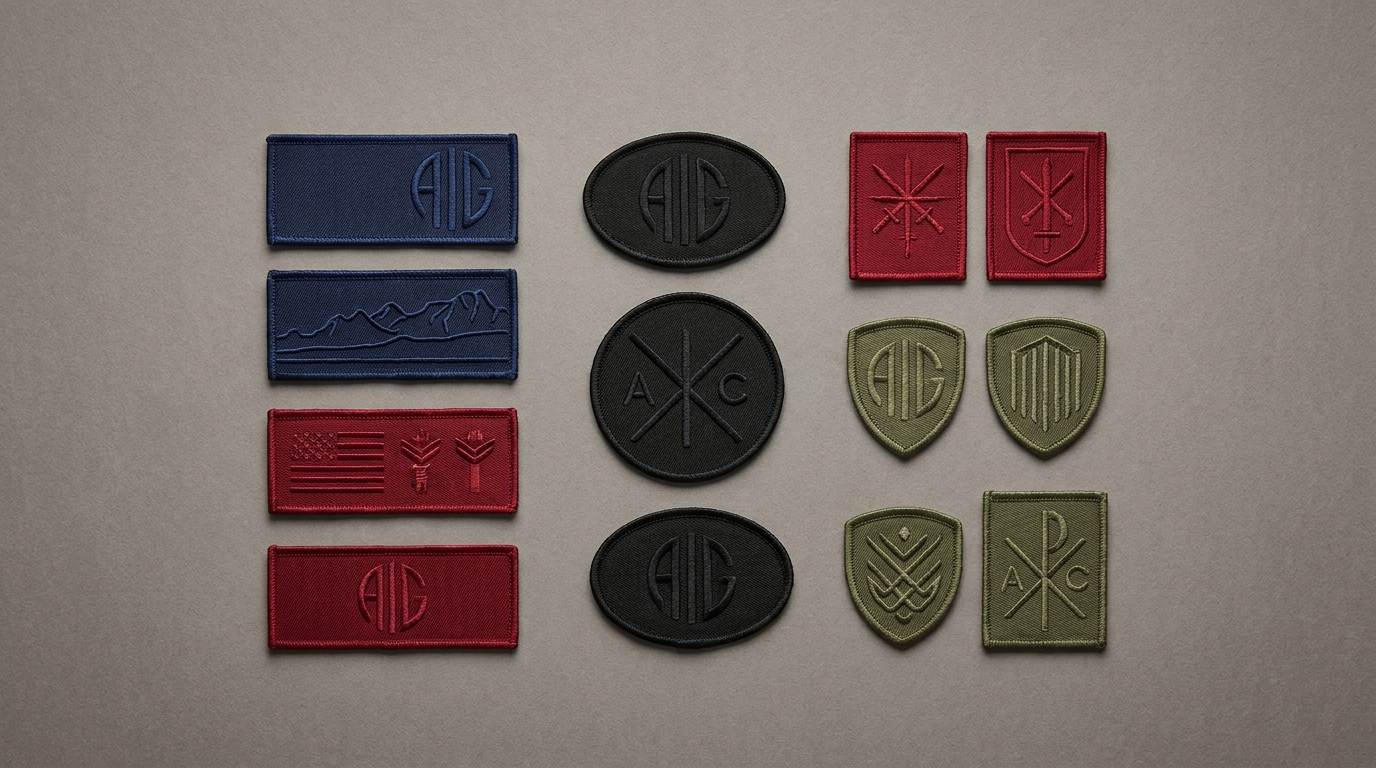
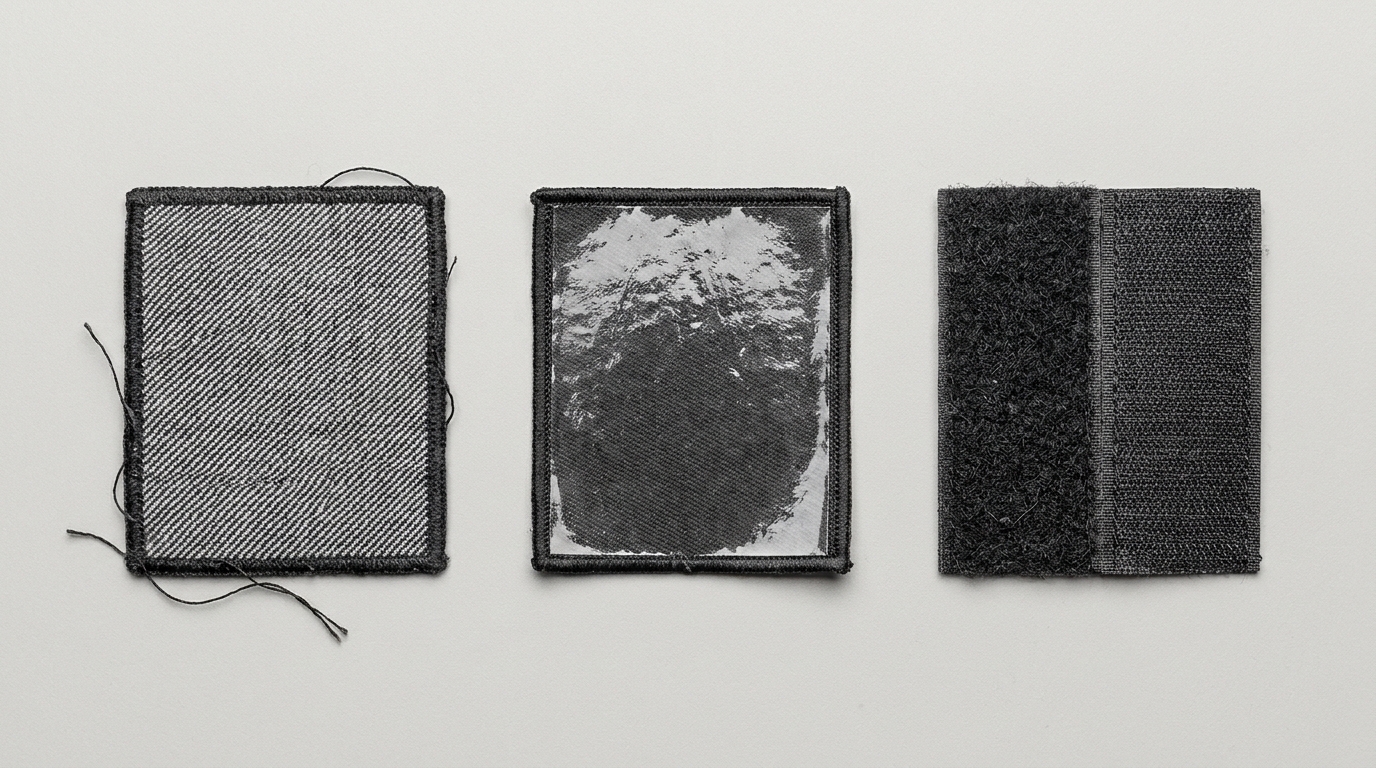
Sew-on backing is the baseline. A plain woven or heat-seal edge, no adhesive, intended to be sewn directly onto the garment or accessory. Most uniform and workwear applications use sew-on because the bond is permanent and survives industrial washing. Specify sew-on when the patch is a structural part of the finished product.
Iron-on backing (heat-seal adhesive) applies with a heat press and is appropriate for medium-duty applications where sewing is not practical. The bond holds well on cotton and cotton-blend fabrics but is weaker on polyester and synthetics. For garments that will see repeated industrial laundering, iron-on alone is not sufficient. Most workwear programs use iron-on plus sew-on perimeter stitching.
Velcro® (hook-and-loop) backing is used where the patch needs to be swappable: uniform programs where personnel rotate patches by rank, tactical gear, and bag systems. Velcro doubles the overall patch thickness and adds to per-unit cost. Specify it only when reconfigurability is a functional requirement.
Self-adhesive peel-and-stick backing is suitable for short-term promotional applications, packaging decoration, or display. It is not designed for textile applications that will be washed. Do not spec peel-and-stick for garments, unless used as an application tool to hold the patch in place while sewn.
Artwork Preparation and Pre-Production Samples
Most production delays on woven patches trace back to artwork that is not set up correctly for the loom. Supplying a print-ready vector file does not automatically mean it is loom-ready. Specific adjustments that standard print files require before weaving begins are common, and catching them early is the difference between a two-week turnaround and a four-week one.
Supply artwork in vector format (AI, EPS, or SVG) with fonts converted to outlines. If vector files are not available, a high-resolution raster file at minimum 300 DPI at final patch size is acceptable but may require additional artwork time to trace. Provide a Pantone or thread reference for each color in the design. If no reference is provided, thread colors will be matched to the nearest standard and may diverge from your brand guidelines.
Pre-production samples are the quality control gate before a full production run. For orders over 500 units, a physical pre-production sample is strongly recommended and in many cases required by contract. The sample confirms color matching, edge finishing, and backing adhesion. Approval should come from someone with authority over brand standards, not just the procurement contact. Production begins only after written sample approval, and changes requested after approval may require a new sample and reset the timeline.
For repeat orders, simply provide the previous order number you would like to order and a new order with the exact same specs will be placed.the original production file and the approval record from the first run.
Minimum Orders, Lead Times, and Volume Pricing
Our minimum order for custom woven patches is 5 pieces, which makes it practical to test a design or produce small quantities for a limited-edition run. The economics shift significantly at higher volumes. All setup costs are included in our standard pricing. If you are planning a production run, get pricing at the quantity tier closest to your actual need rather than anchoring to the minimum.
Standard production lead time is 5 to 8 business days from artwork approval. Rush production is available and carries a surcharge; confirm availability before committing a schedule that depends on rush turnaround. For international deliveries, customs and transit time add to the total, so factor that in when setting internal deadlines.
Production runs with multiple colorways or size variants on the same design can often be batched efficiently. Submitting multiple SKUs together rather than as separate orders reduces setup overhead and may qualify for volume pricing across the total unit count. This is a common approach for brands running a core logo patch in two or three colorways at the same time.
Getting the Order Right the First Time
Our team reviews artwork, flags potential production issues, and provides pre-production samples before committing to a full run. For buyers who place repeat orders, we maintain approved files and spec records so reorders go faster and stay consistent batch to batch.
Browse our full range of patch products or request a quote on your next production run. Low minimums start at 5 pieces, volume pricing scales with quantity, and quotes are free. Turnaround on quote requests is typically the same business day.
The information below is required for social login
Sign In
Create New Account