


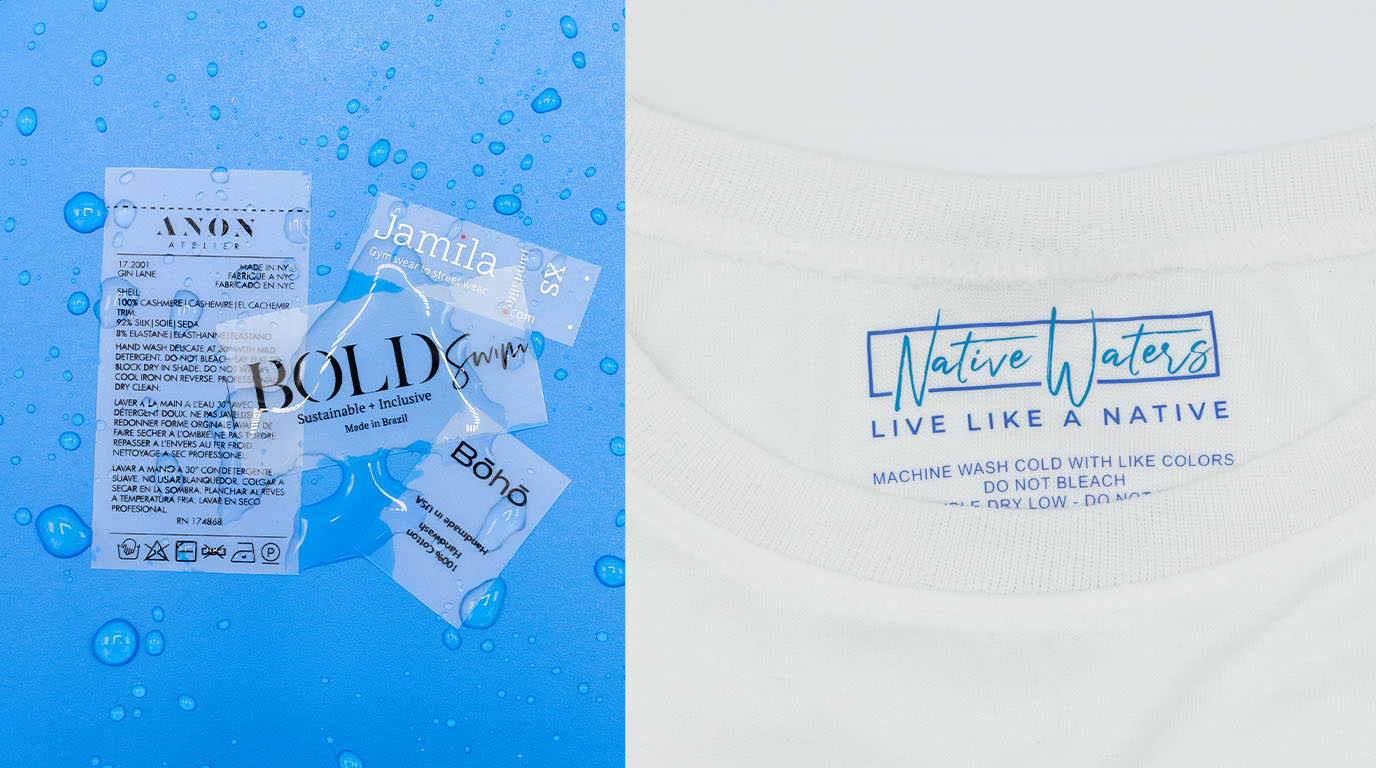
Activewear presents unique labeling challenges that standard clothing labels have difficulty handling. Between high-intensity washing cycles, moisture management demands, and the need for a "zero-gravity" feel during athletic movement, labels must perform under conditions that conventional woven solutions often fail to meet.
For brands in the high-performance athletic space, label failure or wearer discomfort isn't just an aesthetic issue, it directly impacts customer satisfaction and return rates. A bulky or scratchy label that causes chafing during a marathon communicates poor engineering across your entire product line.
This comprehensive guide examines why TPU (Thermoplastic Polyurethane) printed labels and Heat Transfer labels have become the gold standard for modern technical apparel, and how to select the right specifications for your activewear applications.
The Activewear Label Challenge
Athletic garments undergo stress conditions that casual clothing rarely experiences. Consider the typical lifecycle of a compression legging: it is stretched to its limit during dynamic movement, exposed to intense perspiration, and subjected to high-friction environments.
Traditional sewn-in labels frequently fail here. The stitching can create "friction points" that lead to skin irritation (chafing), and the physical bulk of a fabric label can disrupt the streamlined silhouette of aerodynamic gear.
TPU and Heat Transfer labels address these challenges through a "profile-less" construction. Rather than adding a separate physical component that hangs off the garment, heat transfer labels bond directly to the fabric, moving as one with the textile. TPU labels add a physical component to the garments but the TPU material is thin and light-weight which gives it an almost unnoticeable tactile result.
Why TPU and Heat Transfers Excel in Athletic Applications
The primary advantage of these technologies lies in their stretch and recovery capabilities. Modern athletic fabrics are engineered with high spandex content for 4-way stretch. Heat transfers and TPU labels expand and contract alongside these fibers without cracking or peeling.
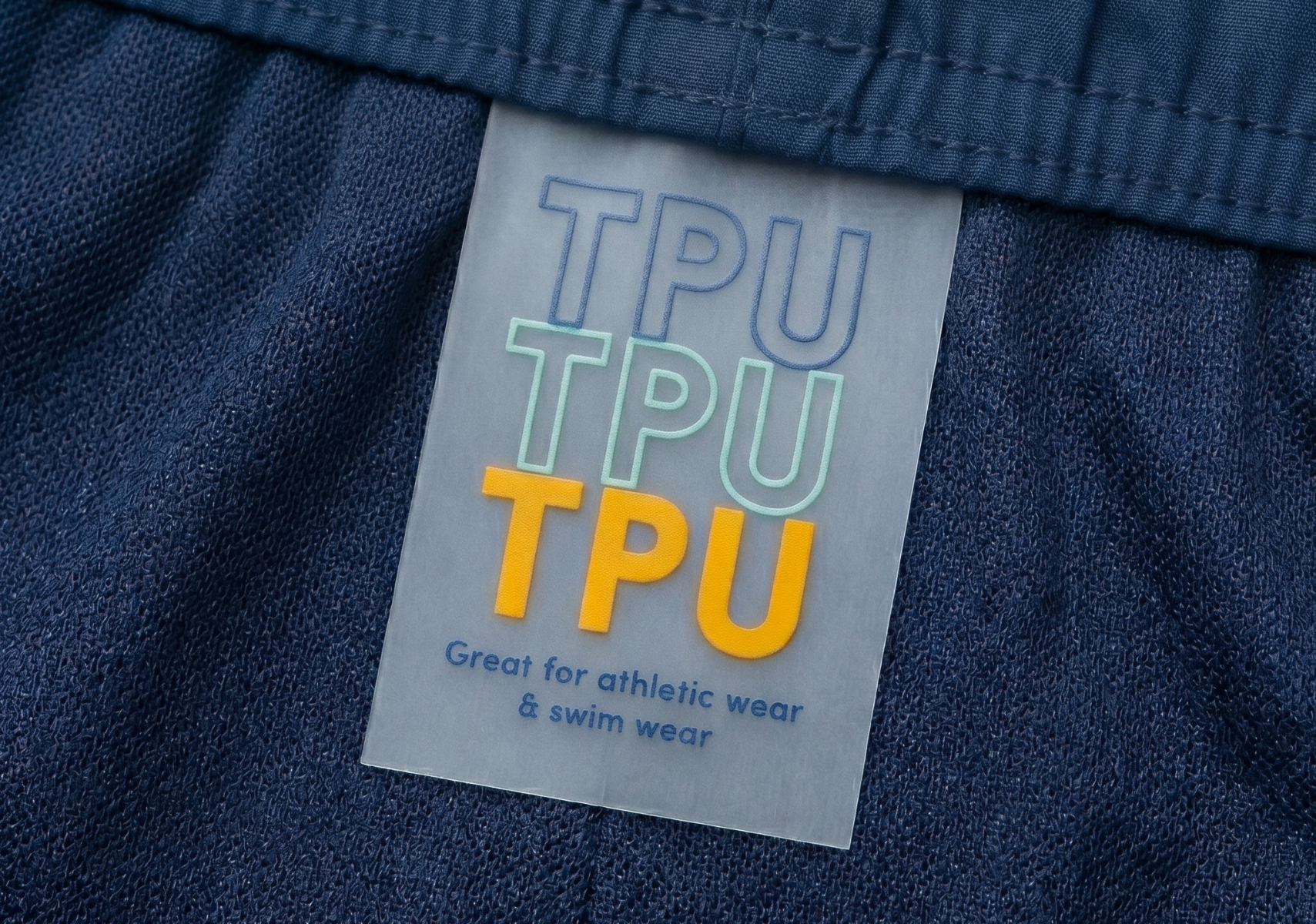
TPU Labels offer a unique, rubber-like, matte finish that is incredibly durable. They are water-proof, soft to the touch, and can be produced with up to 4 print colors giving them a premium, technical aesthetic to branding.
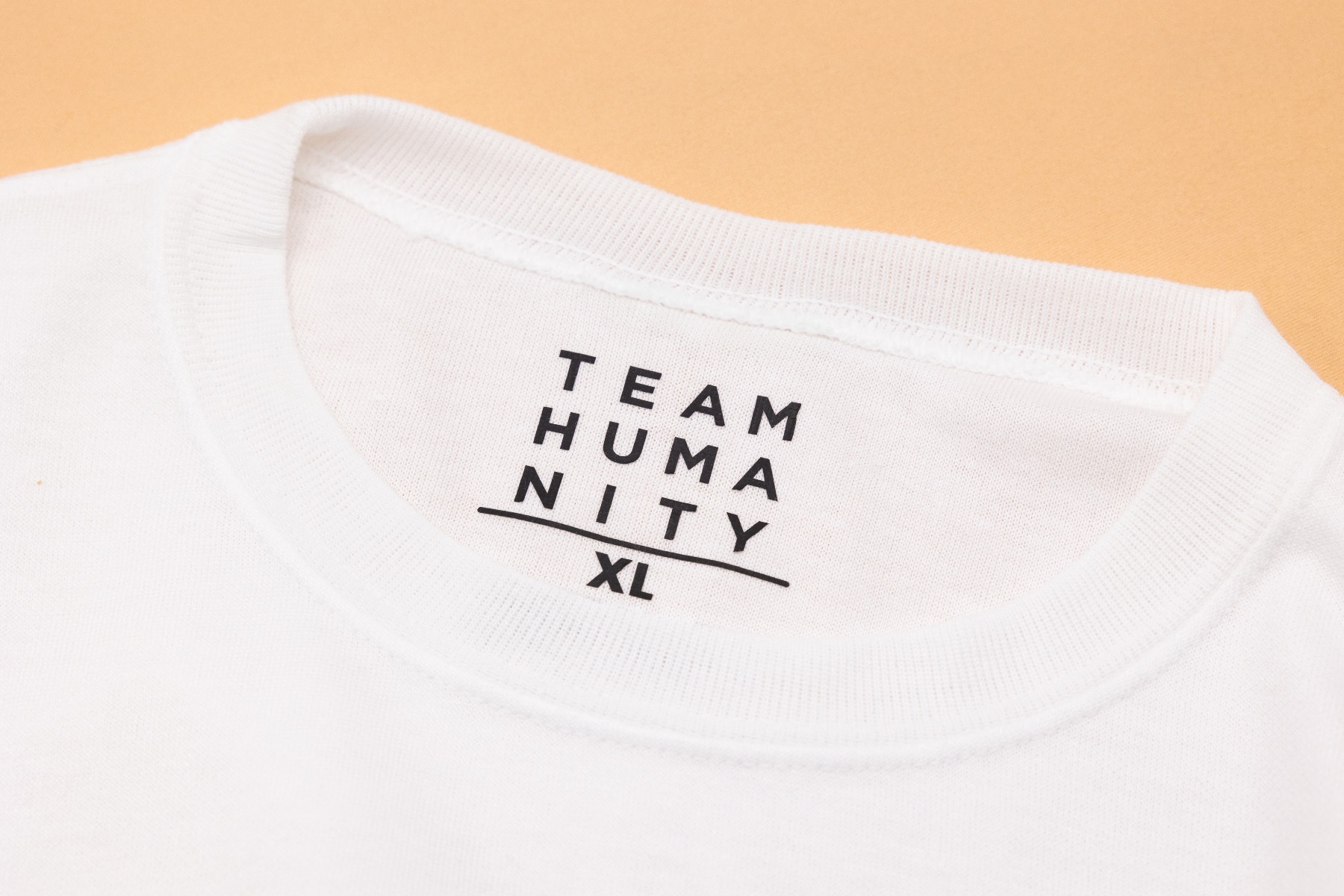
Heat Transfer Labels (Tagless) eliminate the "itch factor" entirely. By printing the branding and care instructions directly onto the interior of the garment, brands ensure a distraction-free workout. This is critical for "second-skin" applications like yoga wear, cycling jerseys, and base layers.
Material Selection: Optimizing for Athletic Performance
In the world of heat transfers, ink chemistry is everything. For activewear, stretch-based water-based inks are preferred over standard plastisol. These inks penetrate the fabric fibers, ensuring the logo won't "pop" off when the garment is stretched during a squat or stride.
TPU (Thermoplastic Polyurethane) is chosen for its environmental resistance. Unlike PVC, TPU is eco-friendly, non-toxic, and maintains its flexibility even in freezing temperatures (essential for winter running gear or alpine sports).
- Sublimation Resistance: High-performance synthetic fabrics are often sublimation-dyed. Lower-quality transfers can suffer from "dye migration," where the fabric color bleeds into the label. Quality heat transfers utilize a "blocker" layer to keep logos crisp and true to color.
- Soft-Hand Feel: The goal is for the user to forget the label is there. Advanced TPU formulations provide a "soft-hand" finish that blends into the texture of the fabric itself. The wearer forgets there is even a label there.
Placement Strategies for Athletic Applications
Because heat transfers and TPU labels are applied via heat press rather than sewing, placement is nearly limitless.
- Internal Nape (Tagless): The most common application for heat transfers, replacing the traditional neck label to prevent irritation.
- External Branding: TPU labels are often placed in a neck seam, or rear waistband. Their soft texture provides a high-end, "tech" look that traditional woven labels sometimes have trouble matching.
- Friction Zones: Because they are flush with the fabric, these labels can be placed in high-friction areas (like the inner thigh or underarm) where a woven label would cause irritation.
Care Cycle Compatibility
Athletic apparel requires frequent, aggressive washing to remove oils and odor-causing bacteria.
TPU and Heat Transfer labels are engineered to withstand high-temp industrial laundering. While a printed satin label might fade, a high-quality heat transfer is cured at high temperatures (typically 300°F+), creating a permanent bond that resists detergents and high-heat drying cycles.
Regulatory Compliance and Readability
Athletic apparel often carries complex technical claims (UV protection, antimicrobial, etc.). Heat transfer technology allows for high-definition printing, meaning even the smallest font sizes for fiber content and country of origin remain perfectly legible.
Unlike woven labels, which can sometimes fray, or catch can obscure text over time, heat transfers remain sharp for the life of the garment, ensuring long-term compliance with labeling laws.
Innovation in Heat Transfer Technology
- Reflective Transfers: Essential for safety, reflective glass-bead technology can be integrated into heat transfers for "night-run" visibility.
- Perforated Transfers: For maximum breathability, labels can be laser-perforated to allow airflow through the application area.
- Anti-Migration Layers: New chemical barriers prevent the bright neons of athletic fabrics from bleeding into the label.
Implementation Strategy for Athletic Brands
Brands transitioning to heat transfers should invest in a high-quality pneumatic heat press. The bond's durability depends on three variables: Time, Temperature, and Pressure.
- Testing: Perform a "stretch test" and a 50-cycle wash test on your specific fabric.
- Compatibility: Ensure your fabric isn't "heat sensitive" (some ultra-thin nylons may scorch).
- Application: For TPU, specialized adhesives may be required depending on whether the fabric is treated with DWR (Durable Water Repellent).
Making the Right Choice for Your Brand
TPU and Heat Transfer labels are perfect for comfort and technical aesthetics in the activewear market. While they require specific application equipment, the payoff is a professional, sleek, and "invisible" labeling solution that athletes prefer.
Our TPU and Heat Transfer solutions are specifically engineered for the rigors of the gym and the trail. We offer low minimums to help emerging brands scale their performance gear without compromise.
Ready to go tagless? Contact us for a sample pack of our durable heat-transfers and TPU labels to see how they perform on your technical fabrics.
The information below is required for social login
Sign In
Create New Account