


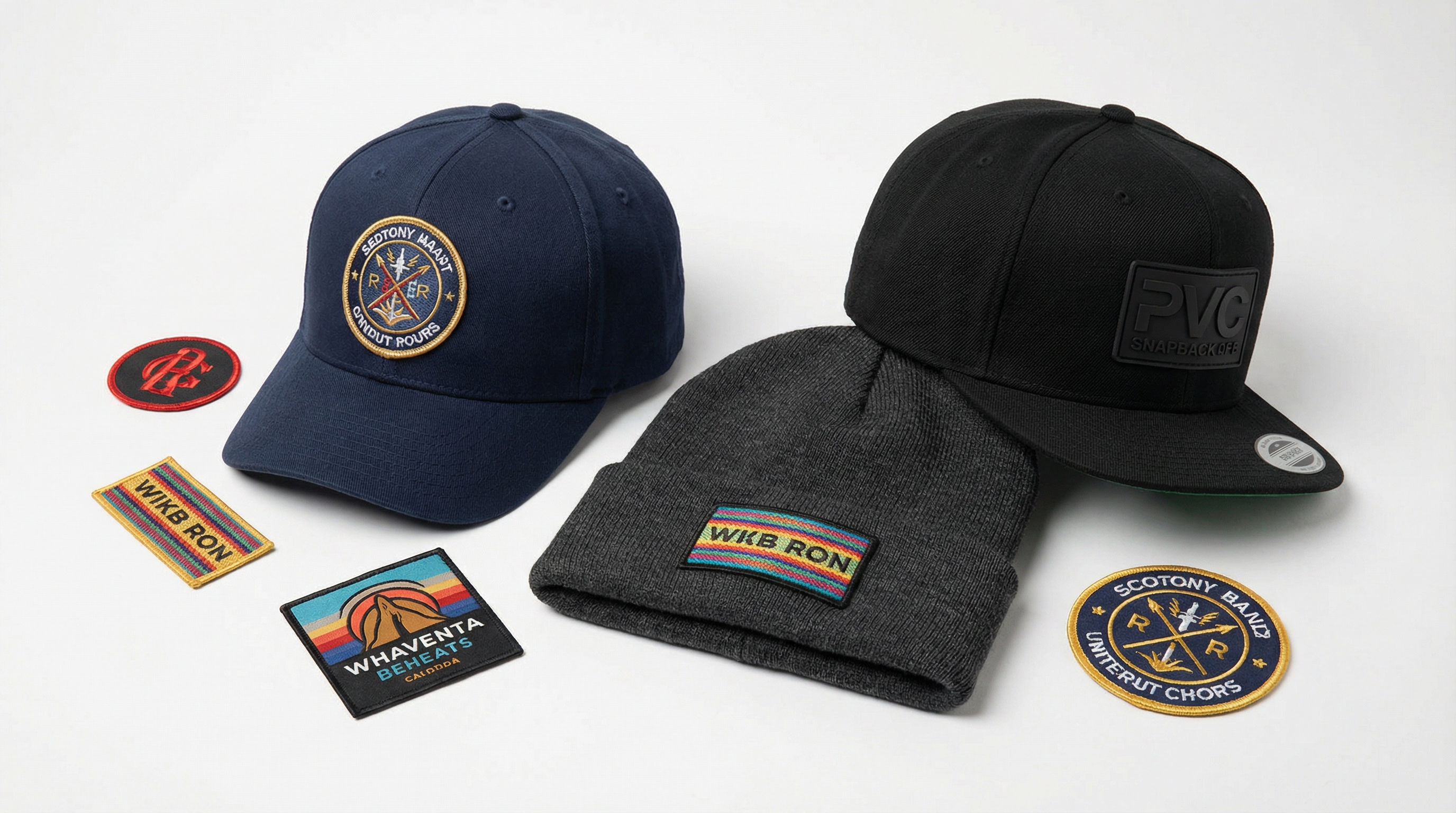
Custom hat patches have become one of the most effective ways to transform plain headwear into branded statements, team identifiers, or personal expressions. Whether you're outfitting a sports team, promoting a business, or creating limited-edition merchandise, the right patches can turn ordinary hats into memorable marketing tools that people actually want to wear.
Over the past decade, we've seen hat patch orders increase by over 200% at Custom Woven Labels. The appeal is obvious: patches offer more design flexibility than direct embroidery, they're more durable than heat transfers, and they create a distinctive textural element that photographs beautifully on social media. Plus, they're incredibly cost-effective for both small runs and large quantities.
But not all hat patches are created equal. The type of patch you choose, how you size it, where you place it, and how you attach it all dramatically affect the final result. This guide covers everything you need to know to make informed decisions that create professional-looking custom hats your audience will love.
Understanding Your Hat Patch Options
The patch landscape offers several distinct technologies, each with unique advantages depending on your specific needs, budget, and aesthetic goals.
Embroidered patches remain the most popular choice for hat customization, and for good reason. The traditional needlework construction creates rich texture and dimensional quality that feels premium in hand. Colors pop beautifully, fine details reproduce clearly, and the finished patches maintain their appearance through hundreds of wash cycles.
Embroidered patches work particularly well for logos with distinct elements, text-based designs, and traditional corporate or team branding. They photograph well under various lighting conditions and create the classic "professional sports team" aesthetic that many customers recognize and trust.
The thread construction allows for impressive detail reproduction. Text as small as 1/8 inch or 9 point remains readable, and complex logos with multiple colors translate beautifully. The dimensional quality of embroidered thread creates natural shadows and highlights that add visual interest without any special processing.
Woven patches offer a completely different aesthetic approach. Instead of raised thread creating dimensional texture, woven patches use colored threads integrated directly into the fabric base, creating flat, smooth surfaces with incredibly crisp detail reproduction.
This construction method excels at reproducing fine details, small text, and complex graphics that might get lost in embroidered thread. Woven patches can achieve almost photographic detail levels, making them ideal for intricate logos, detailed artwork, or designs with small text elements.
The flat construction also means woven patches lay smoothly against curved surfaces like hat crowns, eliminating the bulk that sometimes occurs with heavily embroidered designs. They're particularly popular for outdoor and athletic applications where smooth, low-profile patches perform better during active use.
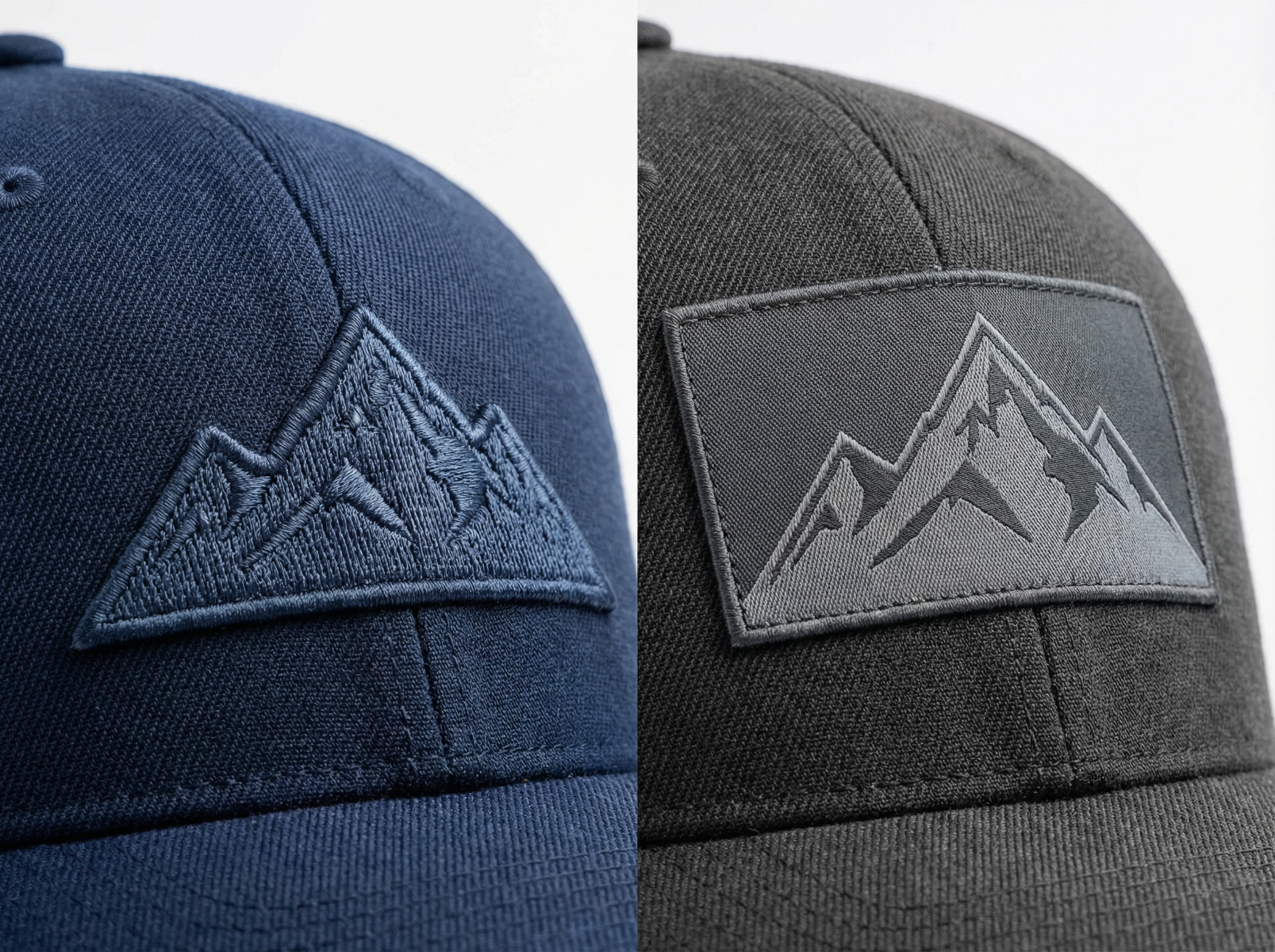
PVC patches represent the newest technology in hat customization. Made from flexible plastic rather than fabric, they offer waterproof durability and design possibilities that traditional patches can't match.
The moldable nature of PVC allows for three-dimensional effects, raised lettering, and textural elements that create dramatic visual impact. Colors remain vibrant indefinitely, and the material is virtually indestructible under normal use conditions.
PVC patches work exceptionally well for outdoor brands, military applications, tactical gear, and any situation where weather resistance is important. They're also popular for creating modern, technical aesthetics that suggest advanced materials and cutting-edge design.
Sizing Considerations for Different Hat Styles
Hat patch sizing isn't just about aesthetic preference — it's about understanding the proportional relationships between patch size, hat style, and overall visual impact. Get the sizing wrong, and even the most beautiful patch can look awkward or amateur.
Baseball caps and snapbacks work well with patches ranging from 1.5 to 2.5 inches in diameter. The front panel provides a natural canvas, but the curved surface means larger patches may not lay completely flat without special construction techniques.
For standard 6-panel construction baseball caps, a 2-inch diameter patch typically provides good visual balance. Smaller patches (1-2 inches) work for minimal branding or when you want the hat design to remain subtle. Larger patches (2 inches and bigger) create bold statements but require careful design consideration to avoid overwhelming the hat's proportions.
The crown curve affects how patches display. Patches with text or directional elements need to account for this curvature — what looks perfect when flat may appear distorted when applied to the curved crown surface.
Trucker hats offer different opportunities due to their front foam panel construction. The flat, rigid front panel can accommodate larger patches more easily than traditional baseball caps. Patches up to 3 inches in height work well without distortion issues.
Beanies and knit hats present unique challenges due to their stretchy construction. Patches must be sized to accommodate fabric stretch without creating pulling or distortion. Generally, patches should be no more than 20% of the beanie's front panel width.
The fold-up cuff area on many beanies provides an excellent patch placement option. This location stays relatively stable and provides a flat surface for patch application. Patches in this location typically range from 1.5 to 2.5 inches in height for optimal appearance.
Flat-bill caps can handle slightly larger patches than curved-bill varieties because the bill doesn't create the same visual weight distribution. However, the larger front panel area means patches need sufficient presence to avoid looking lost in the space.
Placement Strategies That Work
Patch placement on hats follows both aesthetic principles and practical considerations. The goal is creating balanced, professional-looking results that enhance rather than compete with the hat's design.
Center front placement remains the classic choice for primary branding. This position maximizes visibility from the front and creates a symmetrical balance that most viewers find pleasing. The patch becomes the hat's focal point, making this placement ideal for brand logos, team emblems, or primary messaging.
When using center front placement, consider the hat's existing design elements. Many caps have decorative stitching, contrasting panels, or other details that can complement or conflict with patch placement. The patch should enhance these elements rather than fighting them.
Off-center placement creates more dynamic, contemporary looks. Positioning patches slightly left or right of center adds visual interest while maintaining good visibility. This approach works particularly well for casual brands, streetwear aesthetics, or situations where you want to avoid the "uniform" appearance of centered patches.
Off-center placement requires more careful consideration of overall balance. The patch becomes part of an asymmetrical design that needs other elements to create visual stability. Consider the hat's color distribution, existing logos, or styling details when planning off-center placement.
Side panel placement works well for secondary branding, small logos, or when the front panel already contains other design elements. Side panels typically accommodate smaller patches (1-1.5 inches) due to space constraints and the curved surface geometry.
This placement is popular for sponsor logos, team member identification, or subtle brand reinforcement. The patches remain visible from multiple angles while allowing the front panel to focus on primary messaging or remain clean.
Back panel placement serves specific functional purposes like team member names, numbers, or specialized identification. The flat back panel of most hats provides good patch adhesion and easy readability for people behind the wearer.
Consider the intended use when planning back panel placement. Athletic teams often use this location for player numbers or names. Corporate applications might include employee titles or department identification.
Attachment Methods: Pros and Cons
How you attach patches to hats affects both appearance and durability. Each attachment method offers distinct advantages depending on the application requirements and performance expectations.
Sew-on attachment provides maximum security and longevity. The stitching integrates the patch permanently with the hat fabric, creating connections that withstand heavy use, frequent washing, and rough handling.
This method works best for patches that will see regular use or harsh conditions. Sports teams, work uniforms, and outdoor applications benefit from the superior holding power of sewn attachments. The visible stitching can also become a design element that adds to the overall aesthetic.
The downside is permanence — sewn patches can't be easily removed or replaced without potentially damaging the hat. This makes sew-on attachment less suitable for promotional applications or situations where patch updates might be needed.
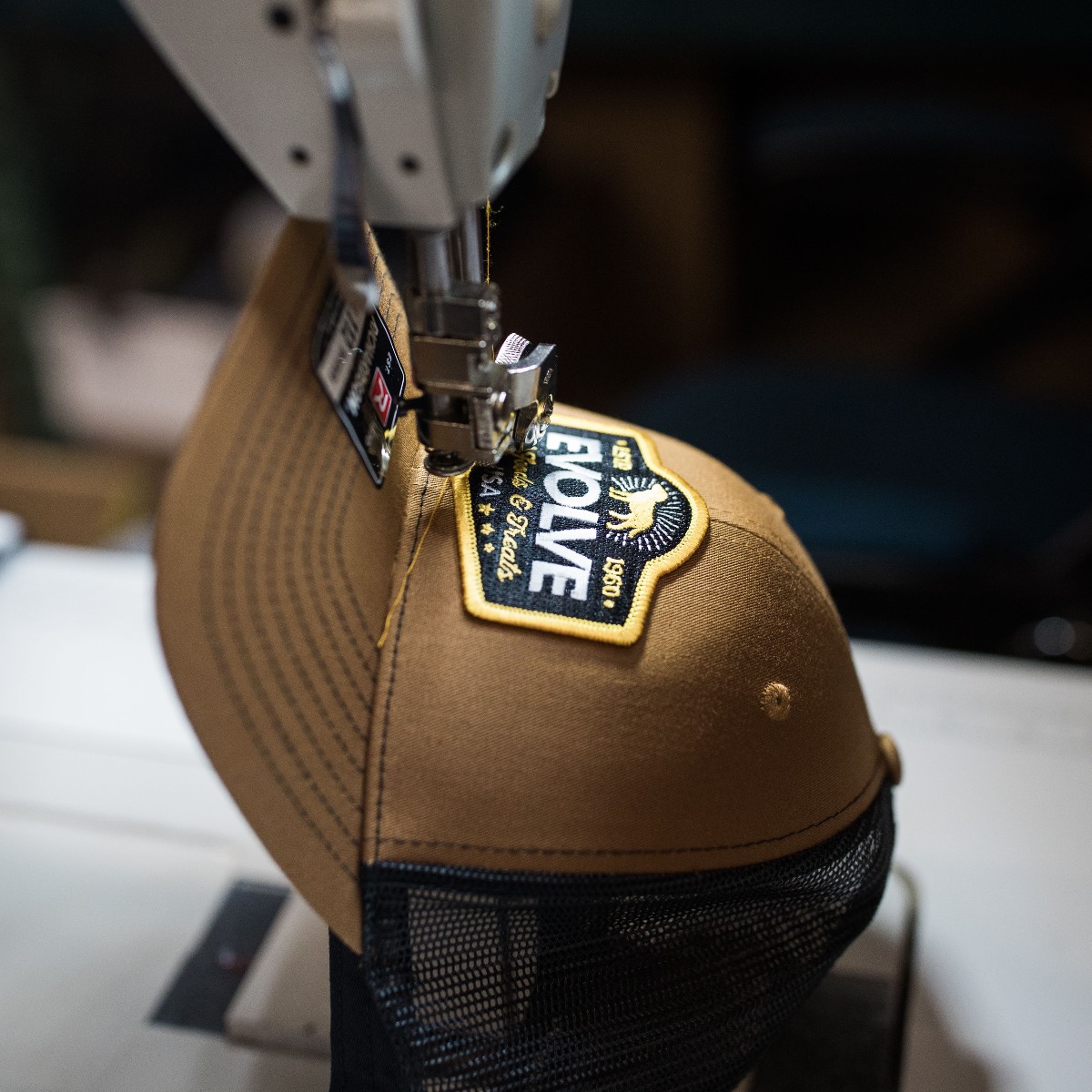
Heat-seal backing offers convenience and clean aesthetics. The patches adhere using heat and pressure, creating smooth attachment without visible stitching lines. Application is quick and doesn't require specialized sewing equipment.
Heat-seal works well for promotional applications, temporary branding, or situations where you want to avoid the industrial appearance of visible stitching. The attachment strength is sufficient for normal wear but may not withstand aggressive washing or harsh use conditions.
Temperature sensitivity can be a consideration. Extremely hot conditions or direct heat exposure (like leaving hats in hot cars) can potentially affect heat-seal adhesion. For most applications, this isn't a practical concern.
Velcro attachment provides the ultimate in flexibility. Patches can be easily removed, replaced, or swapped between different hats. This system works particularly well for tactical applications, team sports with changing rosters, or promotional campaigns that require frequent updates.
The hook-and-loop construction adds bulk and thickness that may not suit all aesthetic preferences. However, for functional applications where changeability is needed, Velcro attachment offers unmatched versatility.
Consider the Velcro quality carefully. Industrial-grade hook-and-loop systems provide strong holding power and long service life, while cheaper options may fail quickly under normal use.
Magnetic attachment represents newer technology that provides easy changeability without the bulk of Velcro systems. Strong rare-earth magnets hold patches securely while allowing instant removal or replacement.
This system works best with lightweight patches and applications where the hat won't experience extreme physical stress. The clean attachment method appeals to users who want maximum flexibility without visible attachment hardware.
Magnetic systems require careful consideration of magnet strength versus patch weight. Too weak, and patches fall off during normal use. Too strong, and removal becomes difficult or could damage the hat fabric.
Design Principles for Effective Hat Patches
Creating patches that look professional on hats requires understanding how design elements interact with the curved surfaces, viewing angles, and size constraints of headwear applications.
Contrast and readability become critical when patches will be viewed from various distances and lighting conditions. Designs that look perfect on flat surfaces may become illegible when curved around a hat crown or viewed from across a room.
High contrast between patch elements and background colors ensures readability under diverse conditions. Light text on dark backgrounds or dark text on light backgrounds work better than subtle color combinations that might disappear under certain lighting.
Consider the hat color when planning patch designs. A white patch with black text looks crisp on dark hats but may lack sufficient contrast on light-colored headwear. Planning patch colors with specific hat colors in mind creates more professional results.
Scale and proportion affect how patches integrate with overall hat aesthetics. Tiny patches can get lost on large hat surfaces, while oversized patches can overwhelm smaller hat styles or create uncomfortable bulk.
Text sizing requires special attention. Letters that seem adequately sized on flat proofs may become difficult to read when curved around hat surfaces. Plan for slightly larger text than you might use on flat applications.
Graphic elements should remain recognizable when viewed from typical social distances (3-10 feet). Fine details that require close inspection don't serve the branding or identification purposes that most hat patches are designed to fulfill.
Color psychology and brand alignment influence how patches are perceived and remembered. Bright colors attract attention and work well for promotional or recreational applications. Subdued colors communicate professionalism and work better for corporate or formal uses.
Consider the emotional associations of different color combinations. Traditional combinations like navy and white suggest stability and trustworthiness. Bold combinations like red and black create energy and excitement. Your color choices should support your overall brand messaging.
Directional elements need careful consideration due to hat curvature. Text, arrows, or other directional graphics may appear angled or distorted when applied to curved surfaces. Design elements should account for this curvature to maintain professional appearance.
Material Considerations and Durability
The base material and construction method of hat patches dramatically affect their performance, appearance, and longevity under real-world use conditions.
Thread quality in embroidered patches determines both appearance and durability. We use high-quality polyester threads to maintain color vibrancy through hundreds of wash cycles, resist fading from UV exposure, and maintain tensile strength under stress.
Backing materials affect both application success and long-term performance. Twill backings provide excellent stability for detailed embroidery work and accept heat-seal treatments well.
Felt backings create softer patches that conform better to curved surfaces but may not provide adequate stability for detailed designs. They work well for simple logos or text-based patches where conformability is more important than fine detail reproduction.
Edge finishing options include merrowed borders, and laser cut edges. Merrowed borders create the traditional "patch" appearance with visible border stitching. They're durable and resist fraying but add bulk.
Laser-cut edges provide clean, modern aesthetics with minimal bulk. They work well for contemporary designs and applications where smooth integration with the hat fabric is important. However, they may be more prone to edge wear over time.
Weather resistance becomes important for outdoor applications, athletic use, or situations where hats will experience moisture exposure. Standard embroidered patches handle normal moisture well but may be affected by prolonged submersion or extreme weather conditions.
PVC patches offer superior weather resistance, including waterproof performance and UV fade resistance. They're ideal for marine applications, outdoor work environments, or any situation where traditional fabric patches might fail.
Common Design Mistakes to Avoid
Having produced thousands of custom hat patches, we've identified recurring design mistakes that result in disappointing final products. Avoiding these pitfalls will save time, money, and frustration.
Overcomplicating designs is perhaps the most common mistake. Patches that look detailed and impressive on computer screens often become muddled and illegible when reproduced at actual size. Stick to bold, simple designs with clear focal points.
Fine lines, tiny text, and intricate details don't translate well to patch format, especially on curved hat surfaces. If design elements aren't clearly visible when printed at actual size on paper, they won't work as patches.
Ignoring size limitations leads to patches that physically don't fit properly or look disproportionate on the intended hat style. Always create full-size mockups and test them on actual hats before committing to production.
What looks balanced on a flat design board may appear completely different when applied to a curved hat surface. Physical testing reveals proportion and placement issues that can't be identified through digital design alone.
Poor color choices result in patches that lack impact or become illegible under certain conditions. Colors that look great individually may not provide sufficient contrast when combined in patch format.
Test color combinations in various lighting conditions and against different hat colors. A design that works on white hats may fail completely on dark-colored headwear.
Neglecting production constraints leads to designs that can't be manufactured as envisioned or require expensive modifications. Different patch types have different capabilities and limitations that should inform design decisions from the beginning.
Embroidered patches can't achieve the fine detail levels possible with woven patches. PVC patches can create dimensional effects that fabric patches cannot. Understanding these differences early prevents disappointment and redesign costs.
Industry Applications and Use Cases
Hat patches serve diverse functions across multiple industries, each with specific requirements and performance expectations.
Sports teams use patches for team identification, sponsor recognition, and performance motivation. Durability is important since the patches will endure frequent washing, rough handling, and extended outdoor exposure.
Team patches often require precise color matching to existing uniforms and consistent reproduction across large quantities. Quality control becomes critical when outfitting entire teams or leagues.
Corporate branding applications focus on professional appearance and brand consistency. Patches must look polished in business environments while providing clear brand identification.
Corporate patches often need to work across multiple hat styles and colors to accommodate different departments or applications. Scalable designs that maintain impact across various sizes serve these needs best.
Promotional merchandise requires cost-effective production with broad appeal. These patches often emphasize brand recognition over durability since they may not see heavy long-term use.
Promotional applications benefit from bold, simple designs that create immediate brand recognition and photograph well for social media sharing.
Military and tactical applications demand maximum durability, weather resistance, and functional performance. These patches must perform in extreme conditions while maintaining readability and professional appearance.
Subdued colors, infrared-reflective materials, and specialized attachment systems address the unique requirements of tactical applications.
Fashion and streetwear brands use patches as design elements rather than purely functional identifiers. Aesthetic impact often outweighs durability considerations.
Fashion applications allow for more creative freedom in colors, shapes, and materials, and limited edition patches can add collectible value.
Ordering Process and Quality Control
Understanding the production process helps ensure successful outcomes and avoid common ordering mistakes that lead to disappointing results.
Sample approval represents the most critical step in the ordering process. Never skip samples, regardless of time pressure or budget constraints. The difference between digital proofs and actual patches can be substantial.
Samples reveal actual colors, textures, and proportions that can only be represented so far in digital format. They also allow testing of attachment methods and fit on actual hats before committing to full production runs.
Request samples on the same material and color that you plan to use for final production. Patches that look perfect on white samples may appear completely different on dark or colored hat surfaces.
Production timelines vary significantly between patch types and manufacturers. Standard embroidered patches typically require 4-8 business days after digital proof and sample photo approval. Woven patches even with their specialized production requirements also take 4-8 business days for production after digital proof and sample photo approval.
PVC patches often require the longest production times (12-16 business days) because of the specialized molding and curing processes involved. Plan accordingly for launch dates or events.
Quality control standards should be established upfront to avoid disputes over acceptable production tolerances. Discuss color matching expectations, size tolerances, and defect acceptance criteria before placing orders.
Different manufacturers have different quality standards and capabilities. Some excel at high-volume, cost-effective production while others specialize in premium, small-batch work. Match your needs to the manufacturer's strengths.
Quantity planning affects both per-unit pricing and total investment. Most manufacturers offer volume discounts at specific quantity breaks (100, 250, 500, 1000 pieces).
However, don't order more than you can reasonably use within 12-18 months. Fashion trends change, designs evolve, and excess inventory ties up capital that could be better used elsewhere.
Getting Started: Next Steps
Ready to create custom hat patches that boost your brand and engage your audience? Start with clear goals about what you want to achieve. Are you building brand recognition? Creating team unity? Generating promotional buzz? Your objectives will guide design and production decisions.
Consider your audience and use conditions carefully. Patches for outdoor enthusiasts have different needs than patches for corporate events. Athletic teams have different requirements than fashion brands.
Start with samples to test your concepts before committing to large quantities. Most quality manufacturers offer reasonable sample pricing that's a small investment compared to the cost of a full production run that doesn't meet expectations.
Work with experienced manufacturers who understand hat patch production and can guide you through design optimization, material selection, and attachment methods. The right partnership makes the difference between frustrating experiences and successful results.
Custom embroidered and woven patches start at just 5 pieces, perfect for testing concepts or creating limited releases. Get a free quote today and discover how the right patches can transform ordinary hats into powerful branding tools that people love to wear.
The information below is required for social login
Sign In
Create New Account