


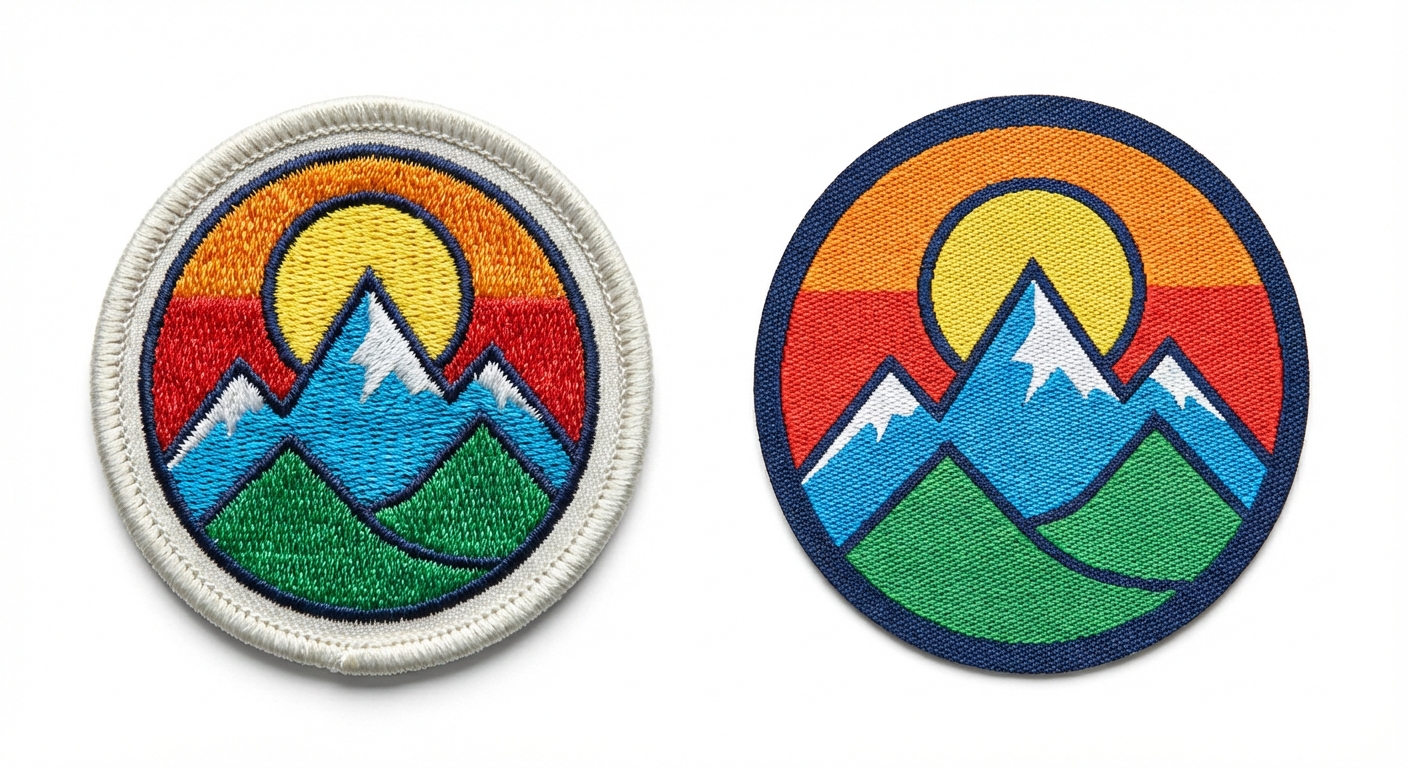
A customer sent us an email last month with a logo that included a mountain range, their company name in a script font, GPS coordinates in 6-point type, and a request for "that thick, textured look." They wanted one patch that could do everything. The truth is, that patch doesn't exist — at least not in a single format. The mountains and bold lettering screamed embroidered. The script font and GPS coordinates needed to be woven. Two different patch types, two different strengths.
This is the choice that trips up more customers than any other: embroidered or woven? They look similar at a glance. They're priced similarly. They can both be sewn on, ironed on, or backed with Velcro. But the differences between them affect how your design actually looks on the finished patch — and picking the wrong one means paying for a product that doesn't quite match what you had in mind.
How They're Made (And Why It Matters)
The fundamental difference between embroidered and woven patches comes down to how the thread creates the design.
Embroidered patches are stitched. A digitized design tells an embroidery machine where to place each stitch, layering thread on top of a twill backing fabric. The thread sits above the backing, creating a raised, textured surface you can feel with your fingertips. The backing shows through in areas where the design doesn't require stitching (called "negative space"), and the whole patch is typically finished with a merrow border — that rolled edge you see on classic military and biker patches.
Woven patches are made on a loom. Instead of stitching on top of a backing, the design threads are woven directly into the fabric structure itself, interlocking with the warp threads to create the image. Think of it like a tiny tapestry. Because the thread IS the fabric rather than sitting on top of it, woven patches are thinner, smoother, and capable of reproducing much finer detail.
That manufacturing difference cascades into everything else — detail capability, texture, thickness, and visual style.
Detail and Text: Where the Gap Is Widest
If your patch design includes fine text, thin lines, or intricate patterns, this is probably the most important section you'll read.
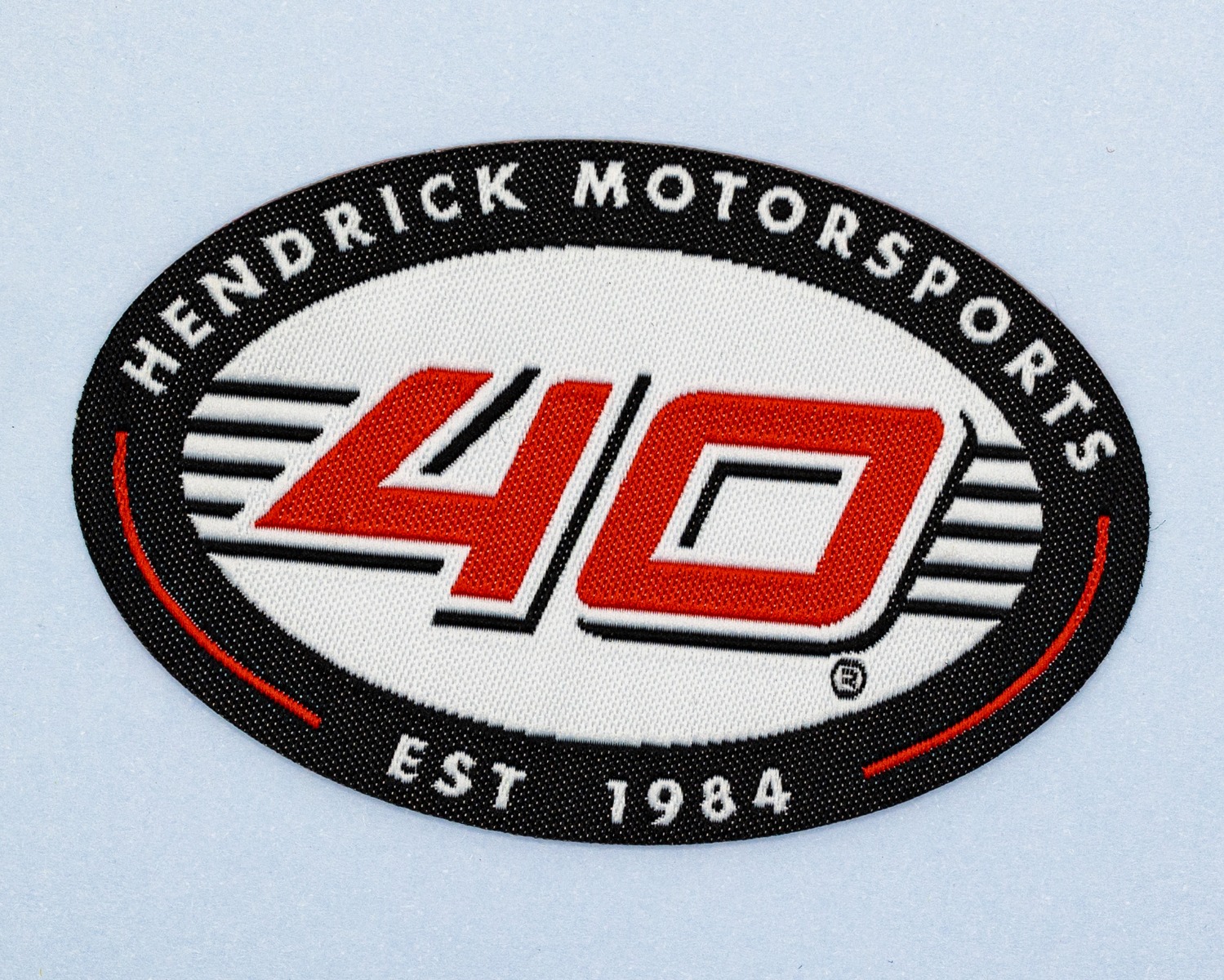
Embroidered patches have a practical minimum text size of about 3mm (8-9 pt). Below that, individual stitches start to merge together and text becomes unreadable. The thread used in embroidery is relatively thick — it has to be, because it needs to create a raised surface and thicker thread is stronger and less likely to break in the embroidery machine — and that thickness sets a floor on how small details can get. Bold, chunky text looks fantastic embroidered. A 4-point tagline does not.
Woven patches can reproduce text down to about 2mm (5 pt) while maintaining legibility. The thread is thinner, the weave is tighter, and the design is created at the fabric level rather than on top of it. That extra millimeter of resolution doesn't sound like much, but it's the difference between GPS coordinates that are actually readable and GPS coordinates that look like a smeared line.
The same principle applies to lines and curves. An embroidered circle with a 10mm diameter will have visible stitch direction — you can see that the thread runs in a particular angle across the curve. A woven circle at the same size will have much smoother edges because the weave structure distributes the detail more evenly.
The rule of thumb: if your design would look good on a bumper sticker, it'll probably work as an embroidered patch. If it would look good on a business card, consider woven.
Texture and Dimension: The Tactile Factor
Run your finger across an embroidered patch and you'll feel it immediately — ridges, valleys, and the distinct raised surface of the thread work. That tactile quality is a huge part of why people love embroidered patches. They feel substantial. They look handcrafted even when they're machine-made. On a jacket, bag, or hat, an embroidered patch announces itself both visually and physically.
Woven patches are smooth. Almost flat. The surface has a slight fabric texture from the weave pattern, but there's no raised thread work to speak of. Some customers describe them as looking "printed" at first glance, though up close the woven structure is clearly visible and distinctly different from a print.
Neither texture is objectively better — it depends entirely on what your brand is going for. Outdoor, military, and workwear brands tend to gravitate toward the rugged dimensionality of embroidered patches. Fashion brands, minimalist lifestyle companies, and brands with intricate logos often prefer the clean, refined surface of woven patches.
Thickness matters for application too. Embroidered patches are noticeably thicker — roughly 2-3mm depending on stitch density — which means they sit higher off the garment surface. Woven patches are typically under 1mm thick, which lets them lie nearly flat against the fabric. If you're applying a patch to a thin nylon jacket or a performance fabric, the lower profile of a woven patch may integrate better with the garment.
Color: Capabilities and Constraints
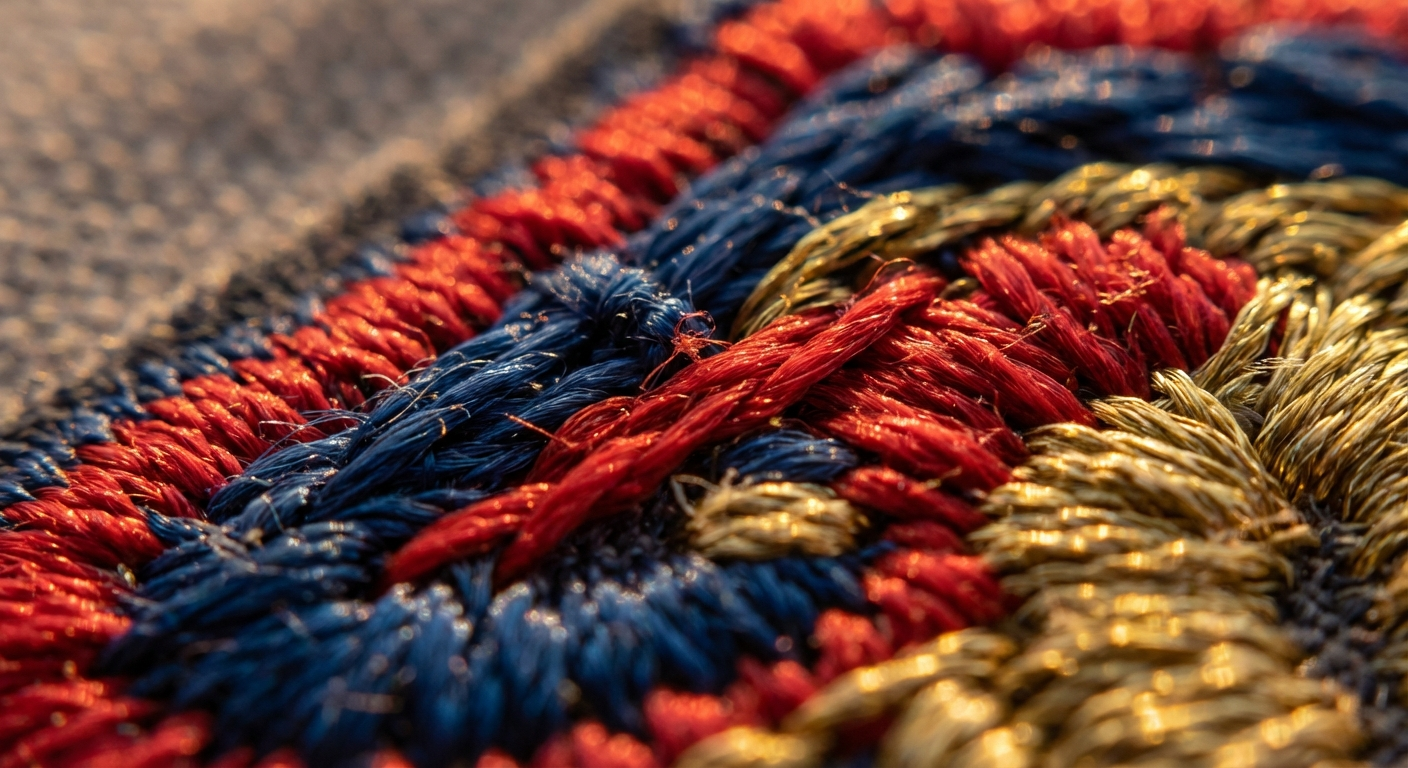
Both embroidered and woven patches use pre-dyed thread, which means your color options are limited by the thread colors available. In practice, the range is extensive — hundreds of thread colors matched to Pantone® colors — but neither type can produce true gradients, photographic images, or unlimited color blends. (For that, you'd need a dye-sublimated or printed patch.)
Embroidered patches work best with 2 to 8 thread colors. Each color change requires the machine to switch thread, which adds production time and cost. Most embroidered patches use 3-5 colors, and the results look sharp and bold. Going above 8 colors is possible but starts to push against practical limits.
Woven patches can handle 8-12 thread colors depending on the loom, giving you slightly more range. More importantly, the finer thread creates smoother color transitions. Where embroidered stitches create visible color boundaries (which can look intentionally graphic and appealing), woven thread blends more subtly between adjacent colors.
For patches with large areas of a single color, embroidered tends to look richer because the raised thread reflects light dynamically. For patches with complex multi-color artwork or detailed color interplay, woven reproduces the design more accurately.
Durability: Both Built to Last
Let's settle this quickly: both embroidered and woven patches are durable. Extremely durable. We've seen patches on jackets that have been through 10 years of wear and hundreds of wash cycles with no significant degradation. The thread in both types is colorfast and resistant to fading, and the backing materials used in modern patches are engineered for longevity.
If we're splitting hairs, embroidered patches have a slight edge in abrasion resistance. The raised thread acts as a buffer — it can absorb friction without exposing the backing underneath. Woven patches, being flatter, don't have that raised buffer, so in extremely high-friction applications (think patches on work gloves or the knee of a pair of pants), the surface threads may show wear slightly sooner.
For 99% of applications — jackets, hats, bags, uniforms, and decorative use — both types will outlast the garment they're attached to. Durability should not be the deciding factor between embroidered and woven patches.
Cost: Closer Than You'd Think
This surprises most customers: embroidered and woven patches are priced similarly. At the quantities most customers order (50-500 pieces), the per-unit cost difference is negligible. Both start at the same low minimums — just 5 pieces — so you're not forced into a large commitment to test either type.
Where cost differences appear is in complexity. An embroidered patch with 90% or more stitch coverage (very little backing showing) requires more thread and more machine time, so it costs slightly more than a similar-sized woven patch. A simple embroidered patch with moderate coverage and 3-4 colors will price out almost identically to a woven patch of the same size.
If price is your primary concern, the honest answer is: get quotes for both. We'll typically quote both options side by side when a design could work in either format, so you can compare directly.
The Decision Framework
Choose embroidered if: Your design is bold and graphic. Your text is large (above 4mm or 10 pt). You want a raised, tactile, three-dimensional look. Your brand aesthetic is rugged, classic, or military-inspired. You're applying to thick fabrics like denim, canvas, or heavy twill.
Choose woven if: Your design includes fine text, thin lines, or intricate details. You want a smooth, flat, refined look. Your brand aesthetic is modern, minimal, or fashion-forward. You're applying to lighter fabrics where a thin profile matters. Your logo has small elements that would get lost in embroidery.
Consider both if: Your brand has multiple products or lines where different patch types serve different purposes. A workwear jacket might get embroidered patches while your tote bags may use woven. Many of our customers order both types and use them strategically across their product range.
Still not sure? Send us your artwork for a free quote. We'll recommend whether embroidered or woven will do your design more justice, and if you want to see both before committing, we can produce samples in either format. Low minimums — just 5 pieces — mean there's no reason to guess when you can see the real thing.
The information below is required for social login
Sign In
Create New Account